In late June and early July, the FVPG sponsored two workshops in the Kwantlen ceramics department with renowned Ontario artist and educator Angelo di Petta. The first workshop covered surface design in which Angelo demonstrated a number of his signature approaches to dealing with patterns on ceramics. His second workshop explored aspects of making moulds as well as using the moulds to create patterns on the surface of the forms created. The workshops were well-attended and provided Guild members the opportunity to socialize and learn together. Angelo also gave an in-person talk about his work at the Shadbolt Centre, and again on zoom for the NWCF. The zoom recording will soon be uploaded onto the NWCF website.
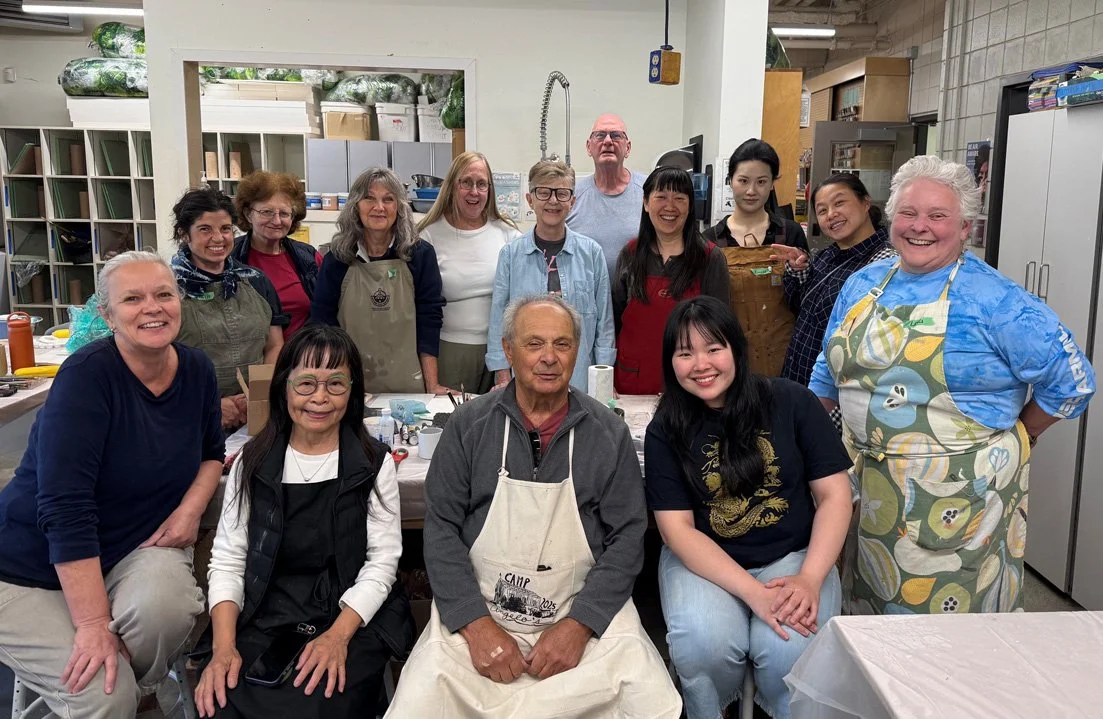
Angelo di Petta with most of the participants in the Surface Design workshop at Kwantlen Polytechnic University in Surrey.
Guild member Eloisa Mae Uy provided a succinct description of both workshops:
Overview
This 5-day workshop by Angelo di Petta gave me an amazing opportunity to explore the relationship between ceramic surface design on tiles and cylinder forms as well as model making for plaster mould construction. His surface decoration is integrated into his creative process, utilizing techniques such as layered underglazes and the application of sealants to create resist patterns that reflect natural processes and abstraction. The session moved beyond traditional slip casting and to explore how textures, patterns, and narratives can be embedded into clay through the mould itself.
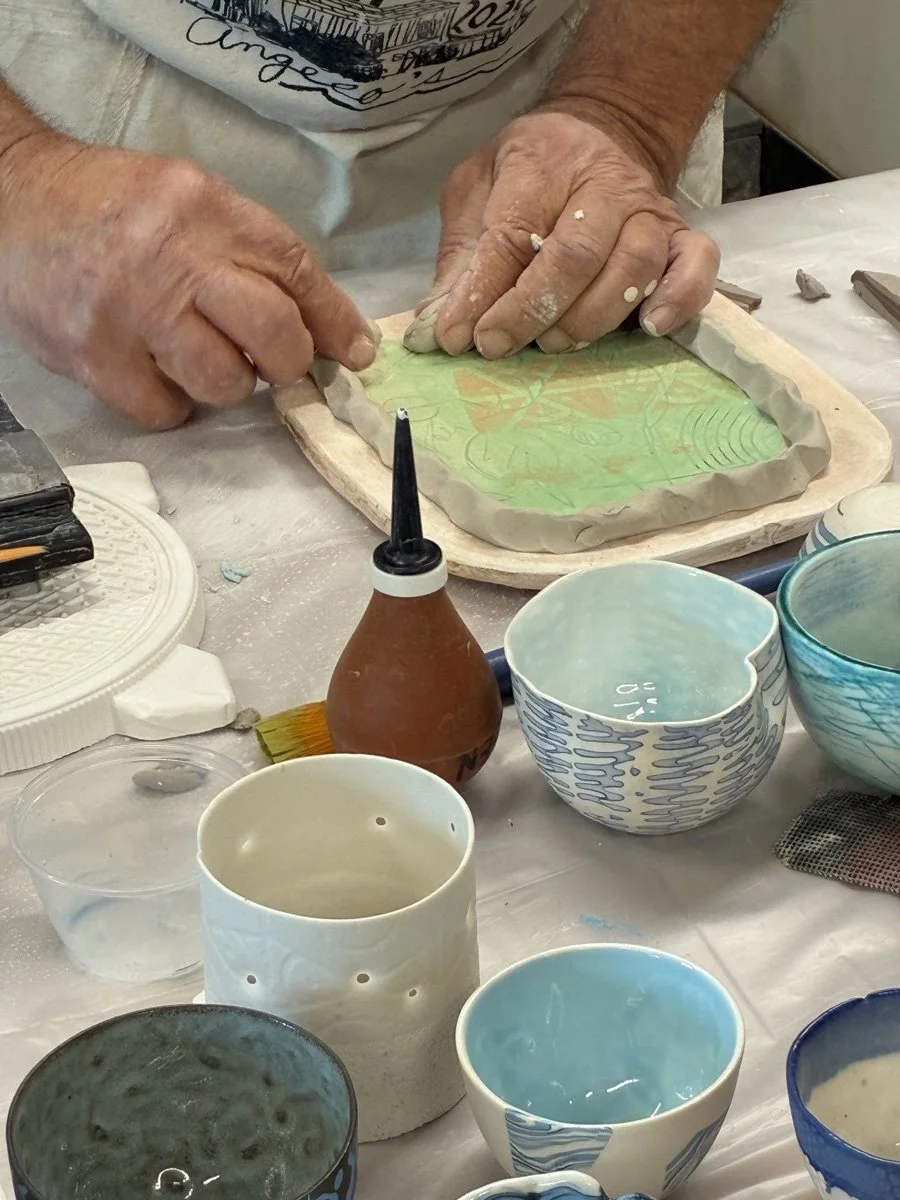
Angelo di Petta demonstrating a mould-making technique for surface decoration.
Key Techniques
• layered underglazes - applying multiple, thin layers of contrasting underglazes allowing to reveal designs underneath after wiping out with a sponge
• sealant resist- using sealant to mask areas, allowing for sharp contrasts between underglazed sections
• reverse relief carving - texturing plaster moulds directly so cast pieces emerge with deep tactile surfaces
• in-mould slip decoration - applying colored slips to mould cavities prior to pouring, creating inlaid patterns that become integral to the piece
Process
I progressed from concept sketches, making tiles, and wheel throwing cylinders to surface decoration then exploring different wonderful techniques that were demonstrated by Angelo. I also modeled and carved textures for plaster mould preparation.
Outcomes
I produced 35 tiles, 5 cylinders, and 7 moulds in total demonstrating the techniques. The results show that decoration doesn’t need to be a late idea but can be engineered into the form from the very first stage.
Reflection
Angelo's method bridges precision and expression and it changed how I approach things. Being able to make a series with steady yet intricate surfaces but still keeping that handmade touch has shifted my practice a lot. I also catch myself looking at mould making as more of a creative opening, not simply a mechanical necessity. Part of it is that I’m more of a hand builder, so I tend to treat the process a little differently.